It is so easy right now to slip into the comforting waters of disassociation. Our US culture welcomes it, welcomes disconnection from one another, the slipping into the brain static of a favorite TV show, the endless scroll of social media, the emotional turning away from all that harms us, and exhausts our souls. And I get it. I do it. You do it. We all do.
It’s an overwhelming time to be alive and having navigate what a fulfilling life and creative practice looks like in the face of unabashed fascism, eugenics and economic collapse. In the face of genocide. In the face of climate disaster.

April 22nd was Earth Day. I was grateful to spend time on April 19th at the San Marcos River, taking family to ride on the glass bottom boats at the Meadow Center for Water and the Environment, and to witness the beautiful ecosystems in the river, something I hadn’t been able to do since my childhood. Each time a child on the boat squealed in delight at seeing a turtle, my heart swelled. On the way back up the trail to the Earth Day celebration and market, there was a local community table with a petition to sign to combat the building of a new AI data center which would threaten the already precarious Hays County region’s water supply from the Edward’s Aquifer and the San Marcos River Watershed. The beauty of the river, surrounded by towering hundred-year-old bald cypress trees and the footprint of capitalist degradation sat close in my mind.
Creatively, I have been disconnected. Between winding down my position at work, packing and trying to sell our home and my chronic health issues flaring up, I have pushed off a lot of my projects until a time when I feel that my mind will be more clear, more open to the life affirming work of creativity, whatever that may be. Yet I am reminded daily that the act of reading is creative engagement. Baking a strawberry cake on a Monday night just because I wanted to and sharing it with friends is creative engagement. Starting a sewing project is creative engagement. Taking deep breaths and stretching in the morning, spending the first ten minutes of the day with myself is creative engagement. It is an affirmation that this body, my body and self are still here, and I don’t have to earn time to connect with these parts of myself. Nor do you.
I found myself really struggling this week as I was having a lot of fatigue and bad asthma symptoms that left me frustrated and with low energy. The realtor was coming to take pictures of our home for the listing, and we had to remove much of what has made our home ours from the walls and counters so that it would look generic and inviting. This home which sheltered us, hosted numerous parties and dinners, held me close after several losses and surgeries, my sanctuary whenever my chronic illness symptoms were too much, will not be ours much longer. Before long (fingers crossed), it will change hands, and be the shelter and sanctuary for someone else.

As we begin to say goodbye, I am reminded not to turn away from the feelings of sadness that bubble up, the preemptive missing of a space that was my heart home for thirteen years. I am allowing my white knuckled grip on my home and the life we lived here to relax and begin to release, as in this release, we find new adventures, and new possibilities. You can read more about my love for our home in my zine, Home Love, which you can purchase using the link from my website.
At the end of this month, I will be leaving my role at Austin Bat Cave (make a donation in my name!) and preparing for our travels. I also hope to return several of my creative projects and will expound on them further.
I’m working on new several new projects, including revisions of stories and work to submit and to prepare for the release of my next book, The Remedy is the Disease, out next spring from Undertaker Books, my paranormal historical novel (more on that in June) and much more I hope to share soon!
What I’m Reading
April was Poetry Month, and while I read poetry all year round, I wanted to highlight some collections that have been meaningful to me recently:
- The Book of Provocations by mónica teresa ortiz. Ortiz is a poet and community member whose work I love and will always find myself coming back to again and again, and is a generous and wonderful human being. I got to interview them a few years ago for Texas Monthly, and this collection of poems is the anti-fascist call to communal care that we all need.
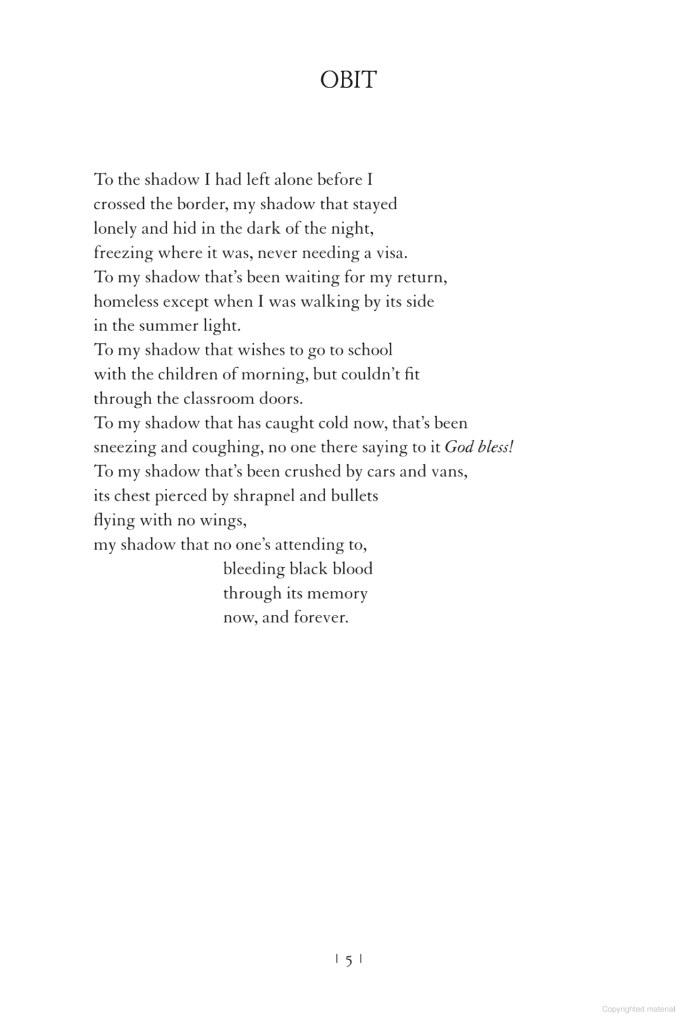
- The Forest of Noise by Mosab Abu Toha is a book that ripped me open from the first poem. Mosab Abu Toha is a Palestinian poet and academic from Gaza. In his second collection of poetry, Abu Toha describes in crushing detail the terror and destruction of Israeli warplanes and bombings, the dehumanization of Palestinian families by Western powers and media, and yet also manages to encompass the beautiful humanity of his fellow Gazans and to affirm his own love, tenderness and existence in the phase of erasure. See the poem below, entitled “Obit,” that has left an indelible mark on my heart.
- Abacus of Loss by Sholeh Wolpé is a beautiful memoir-in-verse that I started reading last year after having the privilege of being one of the featured writers with her at the Agnes Scott College Writers Festival. In this book, Wolpé uses the abacus as an organizing principle to tally the losses of her life, of loved ones, home, country, language, while with each bead, affirming her wonder, love and sense of self. It is a beautiful book.
- You Are Here: Poetry in the Natural World edited by Ada Limón is an anthology of poems about nature and relationship to it featuring some of my favorite poets including Eduardo C. Corral, Analicia Sotello, Hanif Abdurraqib, Joy Harjo and many more.
Books about the Natural World, in honor of Earth Day and our need to lean closely into our irrevocable interconnectedness with one another and the natural world!
- Our Moon: How Earth’s Celestial Companion Transformed the Planet, Guided Evolution and Made Us Who We Are by Rebecca Boyle is one of my favorite books I have read so far this year. It is a sweeping expanse of a book in which Boyle recounts the early origins of Earth’s moon, the satellite’s impact on evolution, it’s cultural impact across the globe, space exploration and so much more!
- Braiding Sweetgrass by Robin Wall Kimmerer is a seminal work that asks us to reimagine and reorient our relationship to the natural world through a framework of interconnectivity and reciprocity. As an indigenous botanist and professor of Potawatomi descent who is also a gardener and poet, Kimmerer’s invitation to the reader provides personal stories and rituals to help understand the lessons she has learned and has shared with others, from how to forage for cattails to prayers of gratitude. I recommend listening to the audiobook and then going back to a physical copy to highlight your favorite lessons and passages, as the poetic and soothing voice of the author makes this an experience like sitting down with a relative to hear their wisdom and stories.
- Soil: The Story of a Black Mother’s Garden by Camille Dungy is a beautiful and poetic memoir due in no small part to the fact that Dungy is a scholar and poet. This book recounts Dungy’s seven-year journey to connect to her garden and yard in her family’s new home in Fort Collins, Colorado. Dungy explores how resisting the homogenous restrictions of her predominantly white neighborhood and HOA by planting native pollinator plants as well as herbs and vegetables helped her to understand her place in the diverse and intersectional discourse of nature writers and what we owe the environments around us. I loved listening to Camille Dungy narrate the audiobook!
- Seed Libraries: And Other Means of Keeping Seeds in the Hands of the People by Cindy Conner. I became interested in reading this book after listening to the Texas Folklife Podcast episode, “Seed Saving and Texas Native Plants,” which highlights the work of the Central Texas Seed Savers. This podcast introduced the history and nature of seed saving and seed libraries as a communal practice to make gardening and growing accessible for all. This is something that enslaved African women did when they braided rice seeds into their hair and Indigenous peoples of the Americas engaging in seed saving to preserve biodiversity and food sovereignty. In this book, Cindy Conner, a permaculture educator and writer, discusses seed saving in the US to protect the food supply, engage in meaningful access to a diverse variety of seeds, and resist the corporate monopoly of industrial farming and seed catalogs. I also learned about and used the seed library at my local public library. See if your local library or community has one! My friend recently shared that she makes her own seed balls of native pollinator plants and uses a slingshot to disperse them!
- World of Wonders: In Praise of Fireflies, Whale Sharks and Other Astonishments by Aimee Nezhukumatathil is a short but beautiful book of essays in which the author, who is a poet and essayist, highlights a different creature or organism such as the whale shark, the axolotl and the corpose
- Entangled Life: How Fungi Make Our Worlds by Merlin Sheldrake is a fascinating dive into mycelium, fungi’s relationship to other organisms, including humans and its potential for helping combat climate change. I am still reading this book slowly, as I do most nonfiction books, especially as I learn more about mycology, foraging edible mushrooms and more from the Central Texas Mycology Society.
- Green Fuse Burning by Tiffany Morris is an Indigenous eco-horror novella I purchased last year but am just now getting to on my tablet. Excited to read it!
- The Backyard Bird Chronicles by Amy Tan. This is on my TBR list and I have it on hold at the library. I have read two of Tan’s novels and love her work, so I am excited for this different kind of book that speaks to where I feel I am in my señora era, standing at the window with my coffee watching the birds in my backyard.

Writing Prompts

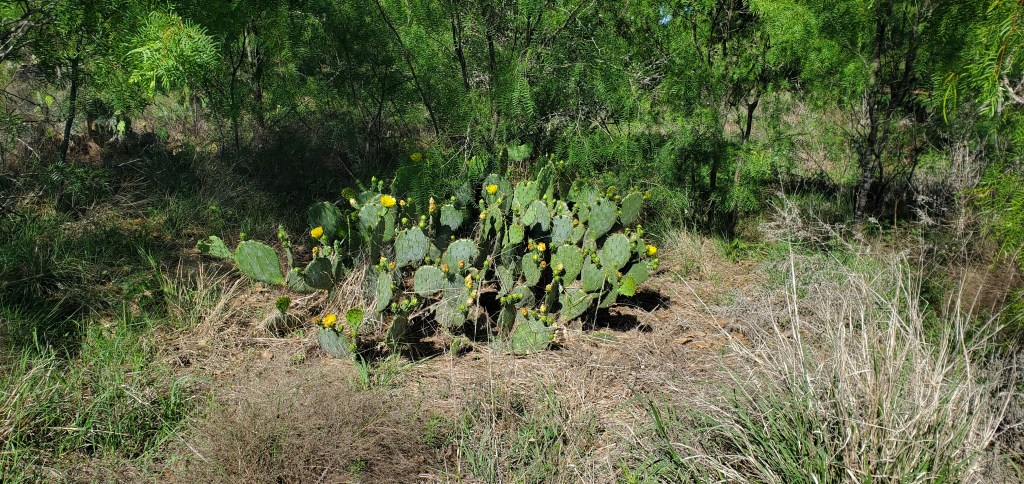
What seeds are you planting in your life right now? What do you hope will grow?
What’s Happening with Leticia?
I’m still lining up my events for 2025 as we prepare to go on the road, but if you would like for me to participate in a reading or event or would like for me to lead a workshop for your community, comment or reach out on my website! After June, I can only participate in events in the cities we are visiting (more on that to come) or virtual events. I will be offering some virtual workshops and other creative opportunities once we are on the road. If you are outside of Austin/Texas and think I should connect with a particular independent bookstore, arts organization or collective, please let me know!
Call to Action: Opportunities for Solidarity and Care
Under this administration, it is challenging to find an equilibrium and a focus for our collective and individual actions (that is on purpose!) because so many rights and communities are under attack. If you, like me, are feeling stuck because you care about everyone affected by the stripping away of federal funding for healthcare and services for people with disabilities, public libraries, public education, and the outright assault on immigrants, trans and queer people and free speech dissent against genocide and Palestinian personhood, I refer you back to my post a few months ago called We Are Interconnected, as I stand by some of these suggestions while also knowing that some of these actions will need to escalate and organizing will need to become even more strategic. I am so proud of friends and community members who have joined or are organizing labor unions in their workplaces, as I truly believe union organizing will be one big way to strike back against our fascist government and hold our “leaders” accountable. No one is coming to save us. We have to ready to take the next steps to care for one another and make real change, even at small, incremental levels.
Here are some other local and international organizations that I continue to support either with labor or monetarily:
- Mask Ban Legislation in Texas is coming back to this legislative session. Bills like this are incredibly dangerous and threaten disabled and immunocompromised people, but also all people’s rights to protest and exist in public spaces. You can use the Clear the Air ATX toolkit to submit public comment and email/call the committee members who are trying to push House Bill 3061 through to a vote in the Senate.
- Boycott, Divest and Sanction movement specifically targets corporations and businesses that materially invest in or support the Israeli war machine, but I also appreciate that many of these same companies, like Starbucks, are targeted for boycotts because of their treatment of their workers. Starbucks in particular has been treating their employees poorly for a long time and recently there were rumblings that they were going to institute a new dress code that banned employees from wearing masks. There are better local coffee shops near you, trust me! It is no coincidence that the US Congress is trying to introduce a bill that would penalize and criminalize people, communities and businesses for boycotting Israel. That means that boycotts work!
- The Sameer Project to provide crucial aid to Palestinians in Gaza for whom food, water and medical supplies are scarce. In addition, I have been sharing the campaigns of two families, Marwa and her children and Eman and her family. If you have a little extra this month, help these families to purchase the food and supplies they need!
What actions are you engaging in or organizations you suggest? I’d love to know in the comments! Or, just let me know what you’re reading!
Take care, each and every day ❤️
Leticia
Discover more from Leticia Urieta
Subscribe to get the latest posts sent to your email.

Hi Leticia,Thank you so much for sharing this reading. I really enjoyed it. Looking forward to your next blog. ❤️I would like to suggest The Strand Book Store
LikeLike
Thank you so much! I have the Strand on my list to visit for sure. Their history is actually covered in the book I have mentioned previously: https://www.penguinrandomhouse.com/books/679154/the-bookshop-by-evan-friss/
LikeLike
Hi Letty,Oh how awesome, thank you. I will check it out. Sent from my iPhone
LikeLike