Learning about the rich and complex histories of the towns we visit has me thinking about our relationship to ancestors, both living and dead. In my last newsletter, I talked about how I struggled with the all the historic monuments and memorials we saw that upheld the myth making of “great men” in American history while the names and contributions of so many are forgotten, or never memorialized at all.

Last week we were staying in Boston and had the opportunities to take day trips to Salem and Concord. Walking the trail around Walden Pond, we visited the place where writer and philosopher Henry David Thoreau lived for three years in the woods surrounding the pond. It is an impressively beautiful, tranquil place, one I could imagine a young Thoreau would feel, in his isolation from the distractions of the outside world, would help him to live a quiet, more deliberate life. The area was cold with impending winter but picturesque. At one point, a train rumbled by, a stark contrast to the serenity of a place Thoreau went to to immerse himself in nature. In the visitor’s center, there were quotes from the author throughout each season he lived there, noting his connection to the way the seasons turned and the world changed around him.
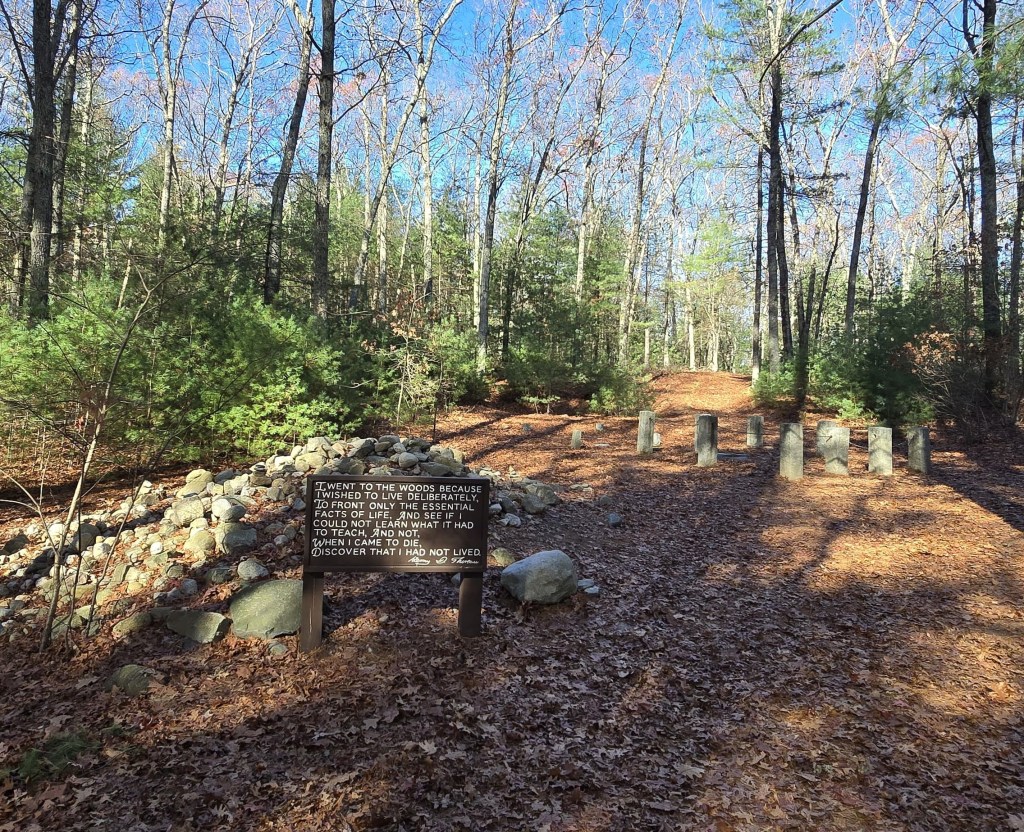
I was glad that the visitor’s center also featured a children’s book, The First Blade of Sweetgrass by Suzanne Greenlaw and Gabriel Frey and parts of the book were posted along the trail as part of the Walden Pond State Park Story Walk, as these stories are often left out of mainstream conversations about the protection and sanctity of these natural spaces, especially considering that the original inhabitants of this land were displaced before Thoreau even built his cabin there. They have ancestral ties to the land and live in kinship to it, yet it is Thoreau’s stories that are the center of this exhibit. Still, it was interesting to reconnect to the author’s works, especially considering his role as an abolitionist and writing Civil Disobedience following his arrest, which influenced other activists and community leaders after his death. It makes me wonder how this thinking can be in conversation with the writing and thinking of living community ancestors who are doing the liberation work now, like Mariame Kaba, whose workshop, “Reimagining the Archives Through Zines” I was able to attend virtually, since I missed her speak at the Philly Zine Festival.
While in Concord, I had a childhood dream come true. We visited Louisa May Alcott’s home, Orchard House, where she lived with her family and where she wrote Little Women and several other works. I was unaware how close a relationship Thoreau and Ralph Waldo Emerson had with Bronson Alcott, Louisa’s father, and how much influence they had on his philosophies, and Louisa’s development.
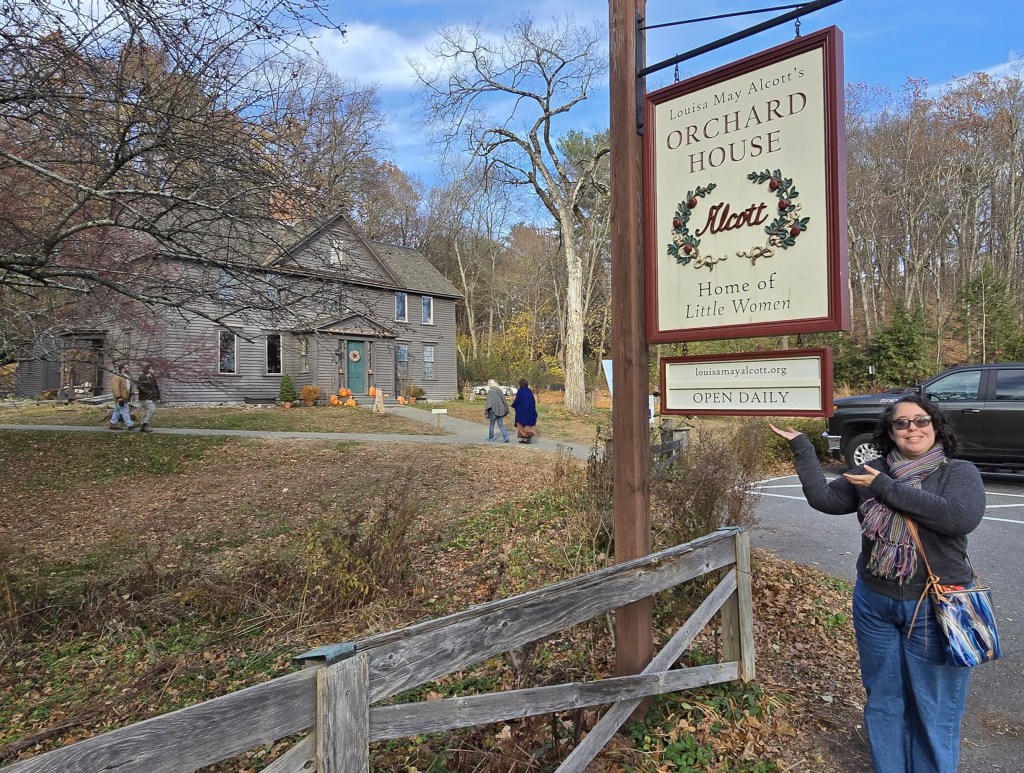
Being in Louisa’s home, seeing where she grew up and where she penned the words that influenced my own dream of becoming a writer and an independent, free willed woman meant to much to me that a few times during the tour I found myself tearing up. What I learned about her from our incredible tour guide (who was wearing a mask like us, yay!) illuminated so much about Louisa’s life that I had never known, including her roll as an army nurse during the civil war as well as her ongoing chronic illnesses after contracting typhoid pneumonia and fever in her service and complications from mercury poisoning, which was then used as a treatment by the army doctors. In her bedroom, her sister May (Amy in the novel) had drawn flowers along the wall by her writing desk where her glass inkwell in the shape of a snail shell stood, and a painting of an owl on the mantel, among other owl iconography, because Louisa was often confined to her bed due to illness that might have been neurological or an autoimmune disease, and listened to the owls hooting outside her window during wakeful nights. This is a connection I felt deeply.
We learned of how Louisa lost both her sisters May and Lizzie (Beth in the novel, whose story is rendered very similarly her real life experiences), which must have taken such a toll on Louisa. Yet, though no one lived in the house anymore, it still emanated hominess, warmth, and the love put into every corner, from May’s drawings into the very wallpaper and even etched with a hot poker into a wood plank in the kitchen to the hand sewn boots and costumes that Louisa and her sisters made for their theatricals, which she wrote, they performed for their family and guests. The house shouted, whispered and sang of their lives, even those cut short by illness and time. Louisa died when she was just 55 years old.
On Friday, November 14th, I woke to the news that Alice Wong had become an ancestor. Alice was a disability rights activist, writer, organizer and editor whose work about and for disability justice has had a profound impact on so many, including myself. She created the Disability Visibility Project and wrote and edited several books, including her incredible memoir, Year of the Tiger: An Activist’s Life. Many incredible tributes have been written to Alice, including by her friend and one of my favorite authors, Steven Thrasher, and the folks at The Sick Times. Many publications have written tributes to her, but I have appreciated ones like these that come from disabled people and people who actually care about protecting folks like Alice, who was born with spinal muscular atrophy and who experienced medical neglect throughout this ongoing Covid pandemic.
Alice understood that disability justice meant justice for all people, and worked with other disabled activists to fight for voting rights for disabled people with her #CripTheVote initiative, and creating the ESims for Gaza to help vulnerable Palestinians be able to access sim cards to communicate with family members and community during this ongoing genocide and ethnic cleansing where so many Palestinians have become disabled due to Israeli bombings, violence, starvation and illness.
Alice embodied disabled joy, fierceness, love for her disabled siblings and was deeply committed to envisioning a better, more accessible and just world for all. She helped to uplift writers, artists and new voices always, and took people under her proverbial wing, especially people who were newly disabled or trying to navigate those experiences for the first time. As an Asian American woman and self-proclaimed “cyborg,” especially after she had to receive a tracheotomy and could no longer speak aloud or eat, but continued to use her voice with assistive technology and through her writing at every opportunity. She wrote and edited others work, including about her love for food, the need for continued masking in medical settings to protect vulnerable people like her, and so much more. You can continue to contribute to her work here.
Alice was 51 years old when she died, and was a star that burned brilliantly, leaving a trail of stardust in her wake.
So many people who are chronically ill, disabled, people of color, neurodiverse and mentally ill folks don’t often expect to live long lives in ableist societies like ours. So many creatives and luminaries become ancestors too soon. But ancestors, whether by blood relation, literary or community ancestors, are still vital connections we have to the lineages we are a part of, and help us imagine more, imagine better, that we can take their lessons to help us build better communities, and a shared world where mutual care, love and understanding are valued over extraction, profit and violence. As I get older, I can only hope to be the kind of ancestor like Alice and so many others whose voice lives on in our hearts long after they are gone.
To find more photos and videos of our travels, follow me on Instagram or Tiktok!

If you’re interested in becoming a paid subscriber to support the newsletter and my work, I’d love to have you! Just $5 a month will help me continue to offer curated book recommendations, writing prompts, author spotlights, resources and more! You will also receive discounts on future workshops and editing services. It’s hard to be an independent artist, and your monthly support helps make my work more sustainable.
What’s Happening with Leticia?
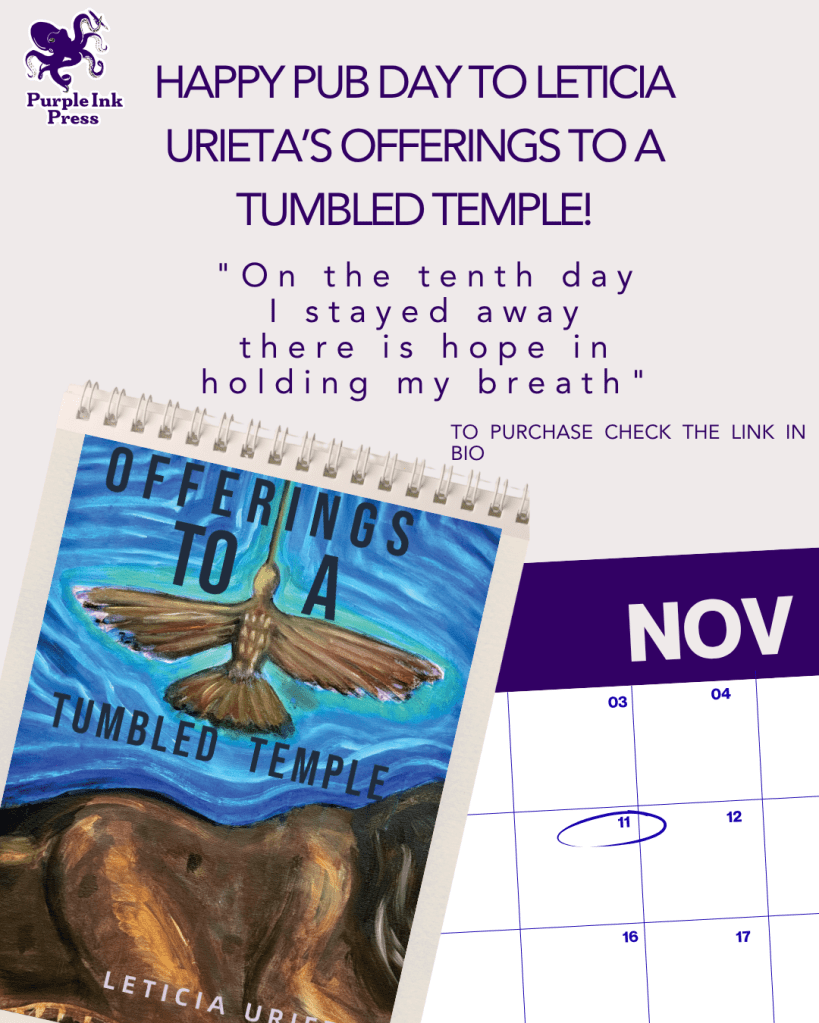
I am excited to announce that my poetry chapbook, Offerings to the Tumbled Temple, is out now from Purple Ink Press! You can purchase a copy here (or 2 or 3!). Chapbooks like these make great gifts for the holidays!
I have two readings I will be participating in before the year ends:
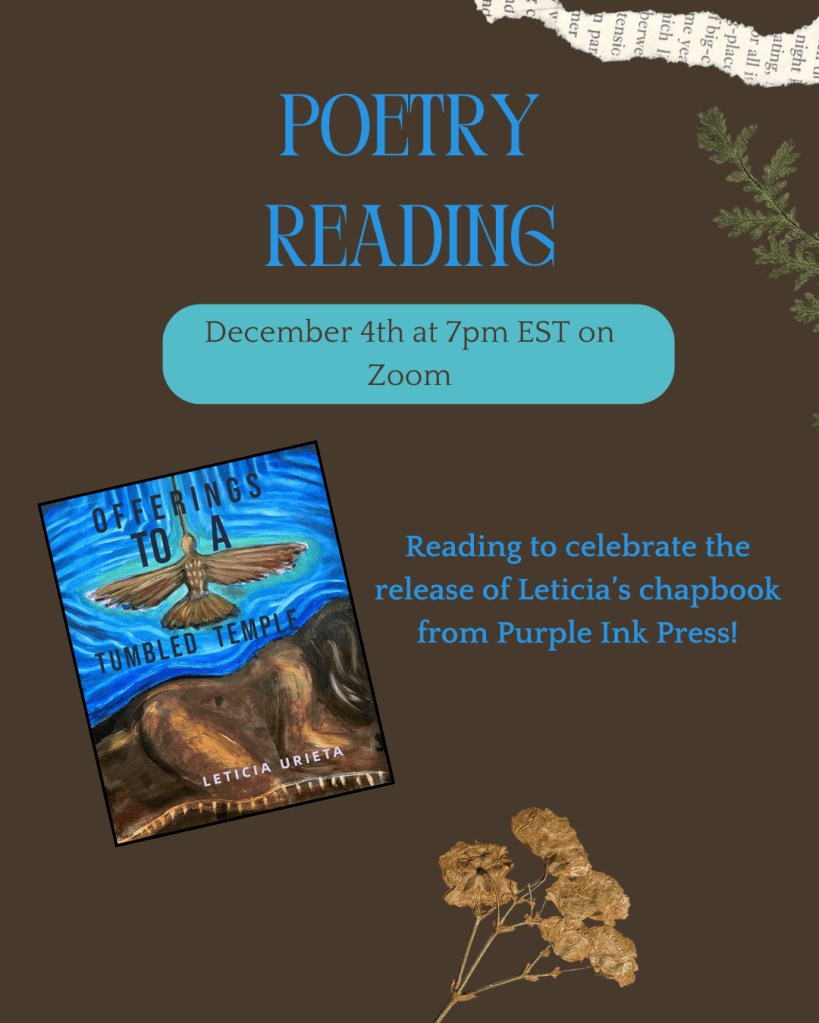
- A chapbook release party with hosted by Purple Ink Press and also featuring two of my friends and poets, Cloud Cardona and Lindsey Carmichael, on Thursday, December 4th at 7pm EST on Zoom. Register here to attend and share with your friends!
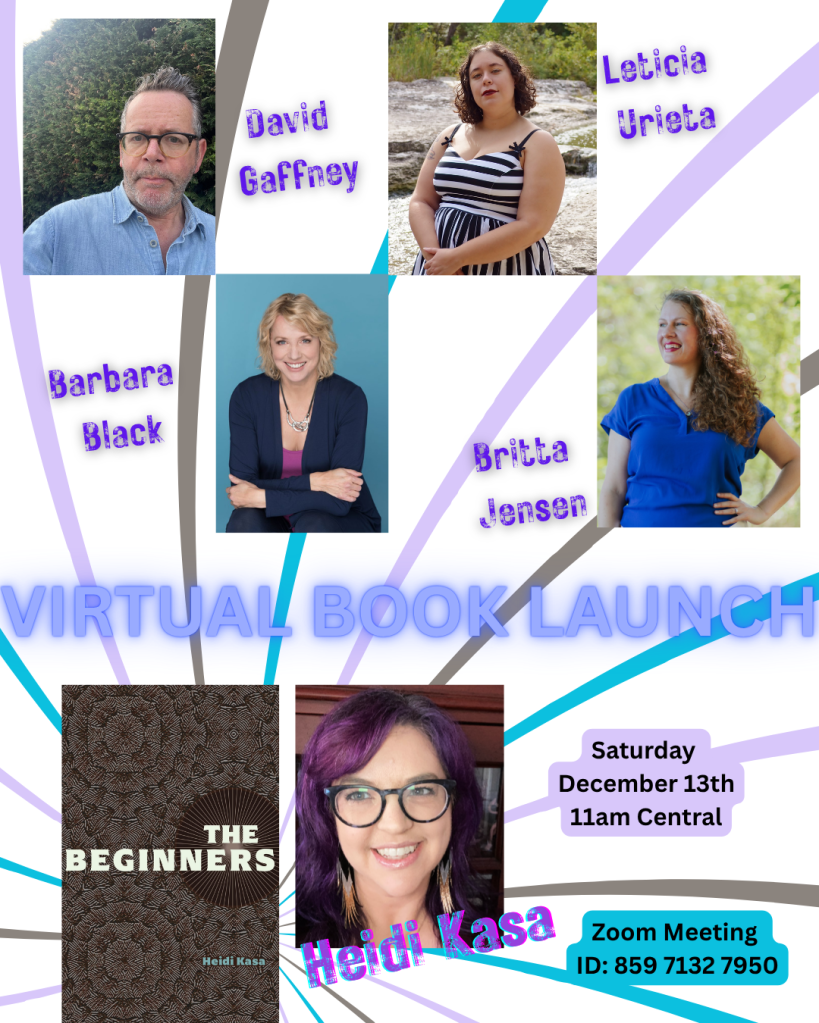
2. To celebrate the launch of my writer friend Heidi Kasa’s new book, The Beginners, I will be reading work with her and several other writers on Saturday, December 13th at 11am CST on Zoom. Come celebrate her work!
Here are some ways that you can help me to promote my book (and other indie poets and writers):
- Buy a copy if you can.
- Share the book with your loved ones.
- If you love your local library or independent bookstore, you can request that they stock a copy.
- If you or anyone you know reviews books, you can request an ARC from me to review!
- I am now booking for 2026 events, so if you have a bookstore, community organization or space you would like for me to provide a workshop or reading/event for, comment or reach out via my contact page on my website to plan further!
I am also getting back into freelancing again, so if you have a publication or blog you are seeking writers for, I would love to work with you! Here are two pieces I wrote this year:
- “10 Books About the Diversity of Disabled Experiences“ with Electric Lit.
- “Creeping Fungus: works of Sporror” with Reactor Magazine.
Workshops and Services
I am currently planning my workshops for 2026, but I have one on the books already, so if you’re in San Antonio, this one is for you:
Climb Inside Other Minds: Exploring Persona Poetry with Leticia Urieta, March 28th from 10am-2pm CST with Gemini Ink (in-person). Register today or share with your poetry loving friends!
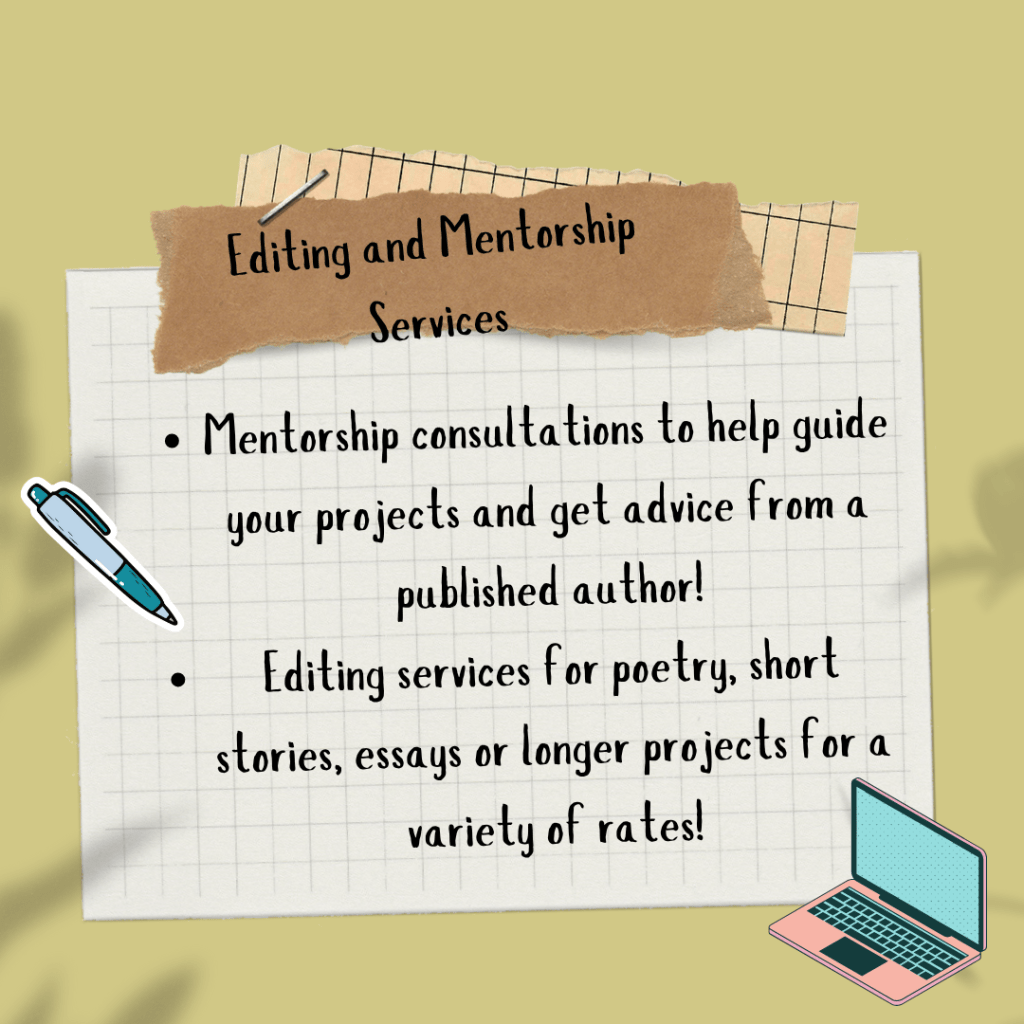
I also offer editing and consulting services to help you with your own creative projects! I have over a decade of experience helping writers of all ages develop their creative voices and their work with a caring and supportive approach. I love helping people learn more about their creative processes to best tell their stories.
I am currently taking on clients ages 16 and up for my services, although if your child would like support honing and publishing their work, I am happy to work with younger clients upon request. Since I write across a variety of genres, I am able to work with folks who are writing poetry, creative nonfiction, short stories, novels and more, with a special place in my heart for horror, speculative fiction and fantasy. If you are working on a comic, that is fantastic. I would love to work with you! Or, please share with other writers you know who might be interested!
What I’m Reading and Watching: Witchy Books and Indigenous Storytelling
As I dive back into working on my novel, I am revisiting some of the books I previously mentioned as research for my book, as well as adding a few new titles to my TBR/Currently Reading List, including Murder Ballads: Illustrated Lyrics and Lore by Katy Horan and When We Spoke to the Dead by Ilise S. Carter. As Scorpio season ends and Sagittarius season begins, I am also reading Cheese, Sex and Death: A Bible for the Cheese Obsessed by Erica Kubick, in preparation for visiting the Vermont Cheese Trail next month.
Death and life, fire and darkness, are at the interplay of much of my reading and creative pursuits right now. Much of this is connected to our travels, and thinking about the ancestral knowledge and legacies of the places we visit. In honor of Native American Heritage Month and the original caretakers of the lands we are visiting, I wanted to share some of the books I have been or plan to read by Indigenous authors:
- Braiding Sweetgrass and Gathering Moss by Robin Wall Kimmerer
- I have talked about Braiding Sweetgrass before, but I added Gathering Moss to my reading list when I purchased it at the gift shop at Walden Pond. We have encountered so many different types of moss on our travels across the southeast and northeast, and I find myself asking a lot of questions about moss that I hope this book can illuminate!
- The Sky Was Once a Dark Blanket by Kinsale Drake
- I picked this beautiful poetry collection up from the Burdock Book Collective in Birmingham, AL and am really enjoying it. Drake is a Diné poet from the Southwest whose work engages with her poetic ancestors, music and the landscapes where she grew up.
- Never Whistle At Night: An Indigenous Dark Fiction Anthology edited by Shane Hawk and Theordore Van Alst Jr.
- I am determined to finish this book this month, but there are so many great stories in here. I taught an excerpt from one in my Creature Feature workshop (click the link to purchase the materials)! Libby has the audiobook read by the authors, so I’m excited to immerse myself in that.
- Every Drop is a Man’s Nightmare by Megan Kamalei Kakimoto
- Megan is a former Austin Bat Cave instructor, and all around awesome person, so when her book came out last year I knew I had to add it to the list! Her debut story collection follows a cast of mixed native Hawaiian and Japanese women through a contemporary Hawaiian landscape filled with inherited wisdom, folklore and the ghosts of colonization. Excited to keep reading this collection!
- Manmade Monsters by Andrea Rogers
- A great and varied collection of dark short stories by Rogers, a Cherokee author who has also written YA and Middle Grade works. My favorite stories were: Hell Hound in No Man’s Land, Shame on the Moon, Lens, I Come from the Water, The Zombie Attack the Drive-In!
- Green Fuse Burning by Tiffany Morris
- Another novella that has been sitting in my Ereader for too long and now I must get to. This is an Indigenous eco-horror novella from Mi’kmaw writer Tiffany Morris, whose shorter works I have read in other collections, including Never Whistle at Night!
- The Berry Pickers by Amanda Peters
- It felt right to prioritize this book right now as we are in Maine. This debut novel explores the lives of a Mi’kmaq family from Nova Scotia as they grapple with their decades-old trauma. In 1962, Ruthie goes missing from the berry farm in Maine where her family works every summer. The novel follows Joe, Ruthie’s older brother and the last person to see her before she went missing, and Norma, a young girl living in Maine with her controlling father and questions about her past. Very excited to make time for this book!
I’ve mentioned other books on my TBR by Indigenous authors in previous newsletters, including The Haunting of Room 203 by Erika Wurth, The Marrow Thieves and Empire of Wild by Cherie Dimaline, Moon Over Crusted Snow by Waubgeshig Rice and Taaqtumi: An Anthology of Arctic Horror Stories that I hope to get to by the end of the year or early in 2026.
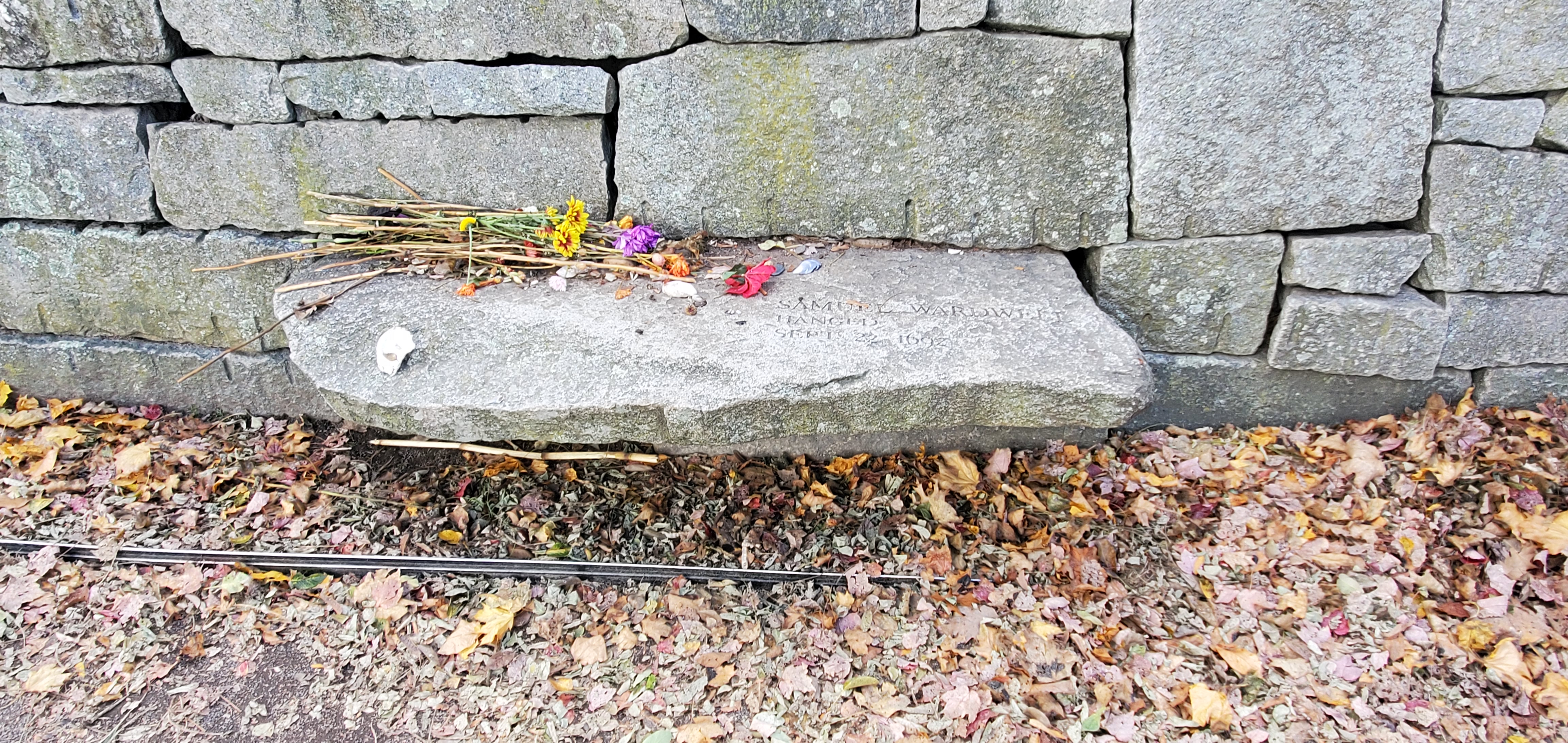
We visited the Salem memorial for the victims of the Salem Witch Trials who were executed. It was harrowing to consider the lives lost during this brief time in 1692 that marked the town forever, in which hundreds were accused of witchcraft, and 19 people lost their lives. One of the first to be accused was an enslaved woman, Tituba, whose story is often lost when the focus of the tragedy is on the white settlers who were killed. For a respectful historical deep dive into the Salem Witch Trials, I strongly recommend the Unobscured Podcast, Season 1.
Over the years, since Bewitched filmed in Salem in 1970 and other films and shows like Hocus Pocus were filmed in Salem, there is now a growing witch population, and witchy culture is an integral part of the community and tourist culture in Salem.
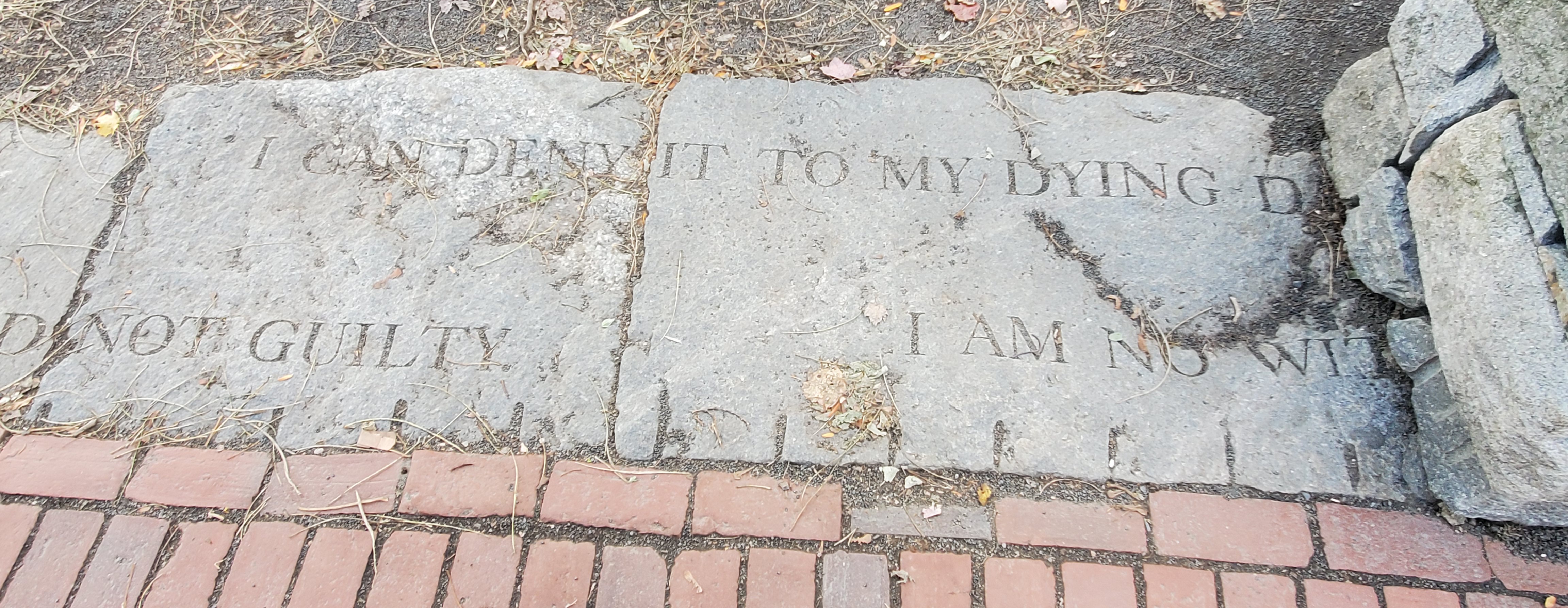
In honor of our visit to Salem, I also wanted to share some Witchy Reads, as this time of year, when the darkness creeps in (but also any time of year), I like to read books related to the history of witches, traditional practices, folklore and connections to the natural world, ancestor work and collective community that belie many witchy practices, both fictional and realistic, including attempts to recover spiritual practices lost to machismo, colonization and violence.
- The Women Could Fly by Megan Giddings
- Megan’s work is always great, and this speculative novel about Josephine, whose mother disappeared fourteen years before, lives in a US where witches are real and women, especially women of color, suspected of witchcraft could be put on trial. Now that Jo is approaching 30, when women must marry and register with the State, she receives the opportunity to fulfill a final request from her mother’s will and a chance to recover what she lost in the past to gain some autonomy in the present.
- Witchlings Series by Claribel Ortega
- I fell in love with this middle grade series about Seven Salazar and her journey as a young witchling facing down evil plots, discrimination and monsters to unite with her friends in the Spare Coven to uncover what lies at the heart of Ravenskill. The fourth book is forthcoming!
- Betwitching by Sylvia Moreno Garcia
- I have read and reviewed several of Sylvia Moreno Garcia’s work, so when this book released this year I immediately added it to my list. This is a multi-generational witchy horror book I am after!
- The Very Secret Society of Irregular Witches and A Witches Guide to Magical Innkeeping by Sangu Mandanna
- Both of these books have been on my witchy reading list as cozy stories of diverse witchy women seeking community.
- Cackle by Rachel Harrison
- I’ve recommended Rachel Harrison’s other books many times before because she is an auto-read author for me. In this novel, considered one of her cozier books, safe, quiet Annie is looking to make a change after being dumped by her boyfriend. She accepts a teaching position that moves her from Manhattan to a small village upstate.Everything there seems ideal. Then Annie meets Sophie. Beautiful, charming, magnetic Sophie, who takes a special interest in Annie, who wants to be her friend. But the rest of the town seems to distrust, and even fear Sophie. Could there be more to Sophie’s identity than Annie believed?
- Witches by Brenda Lozano
- This book has been recommended to me more than once and I have to prioritize reading it soon. This novel in translation is a beguiling story of a young journalist whose investigation of a murder leads her to the most legendary healer in all of Mexico.
- Slewfoot: A Tale of Bewitchery by Brom
- Set in Colonial New England in 1666, Slewfoot is a tale of magic and mystery in which an ancient spirit awakens in a dark wood. He is called both protector by some, and devil by the colonists. To Abitha, a recently widowed outcast, alone and vulnerable in her pious village, he is the only one she can turn to for help. Looking forward to reading more Brom!
- Witches of El Paso by Luis Jaramillo
- So many folks have recommended this book to me, so I’ve got it on my priority list for 2026. This novel takes place in 1943 in El Paso, Texas in which a teenager, Nena, spends her days caring for her nieces and nephews, while longing for a life of her own. The premonitions and fainting spells she has endured since childhood are getting worse, and Nena worries she’ll end up like the scary old curandera down the street. Nena prays for help, and when the mysterious Sister Benedicta arrives late one night, Nena follows her across the borders of space and time. This time traveling, inter-generational novel sounds like the perfect read!
- The Making of Yolanda the Bruja by Lorraine Avila
- This one has been on my Libby TBR for a minute, hoping to get to it soon. When 16-year-old Yolanda Alvarez is initiated into her family’s traditional religion, she has a vision that the new kid in school, the only white boy from a powerful family, is planning a shooting, but convincing people is harder than she thought. She must intervene before it’s too late.
Writing Prompts
Who do you consider your ancestors (familial, community, literary), living or dead? What impact has their voice, words and/or actions had on you and your work? Write a letter or poem of gratitude to them, describing details about what legacy they have created.
Call to Action: Opportunities for Solidarity and Care
Sometimes it feels like there are too many crises to count, but each of us can do our part to show care in ways big and small, via education, aid, and direct action every day. I continue to share the work of the Sameer Project because they are a grassroots group of Palestinians doing everything they can to help their fellow Palestinians in need under the worst possible circumstances. I am offering free one-hour editing/writing mentorship consultations for the first few folks who donate $20 or more to The Sameer Project, a grassroots organization of Palestinian volunteers who are working tirelessly to provide meals, baby formula, water and medical supplies to families in Gaza despite the increased Israeli bombardment despite the “ceasefire” and blockade of aid which is supposed to be delivered. Comment or email me to let me know once you’ve donated and we can schedule a time to chat!
Coming up on the holidays, there are millions of people in the US who are unsure about access to their SNAP benefits at a time in which many folks are already struggling with inflation and food insecurity. If you are able, take some time to look for food banks, free fridges and other mutual aid initiatives in your area. Setting aside a few items at the grocery store each week or month and donating those, or money can be a helpful way to ensure your neighbors have access to what they need. You can also access those spaces if you find yourself in need!
Part of finding peace and connection within ourselves is also working a little each day to ensure that others are afforded the same opportunities and access to have comfort and peace in their lives too.
Take care, each and every day ❤️
Leticia
Discover more from Leticia Urieta
Subscribe to get the latest posts sent to your email.
