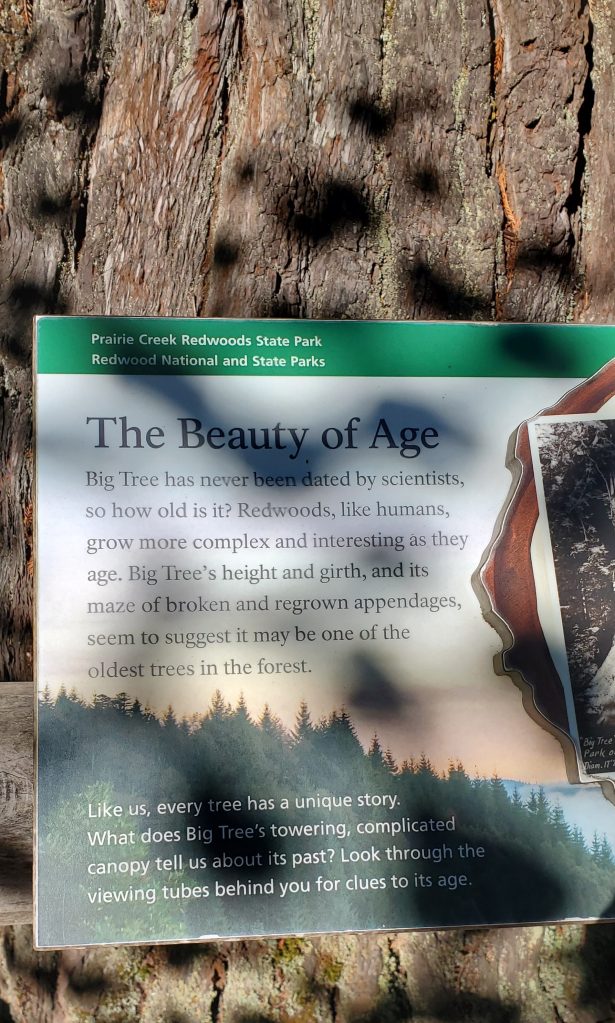
Every morning walk, every hike for us begins with greeting the trees. We’ve greeted, touched and even hugged thick-barked Sitka Spruce trees, Birch trees, Alders, Aspens with their fluttering leaves that look like bells, Lodgepole pines, Coastal Redwoods, Giant Sequoias, Douglas firs, Western Red Cedars, Western Hemlock, Ponderosa pines, Mesquite, Cottonwood, and of course, many many varieties of Oak trees.
Throughout October and early November, we visited the coastal Redwoods and Giant Sequoias throughout Oregon and California. Walking amongst the Redwoods is like walking at the feet of giants. Unless you crane your neck constantly, you can never really see the tree tops, and even then they are so tall and wide that they are obscured.
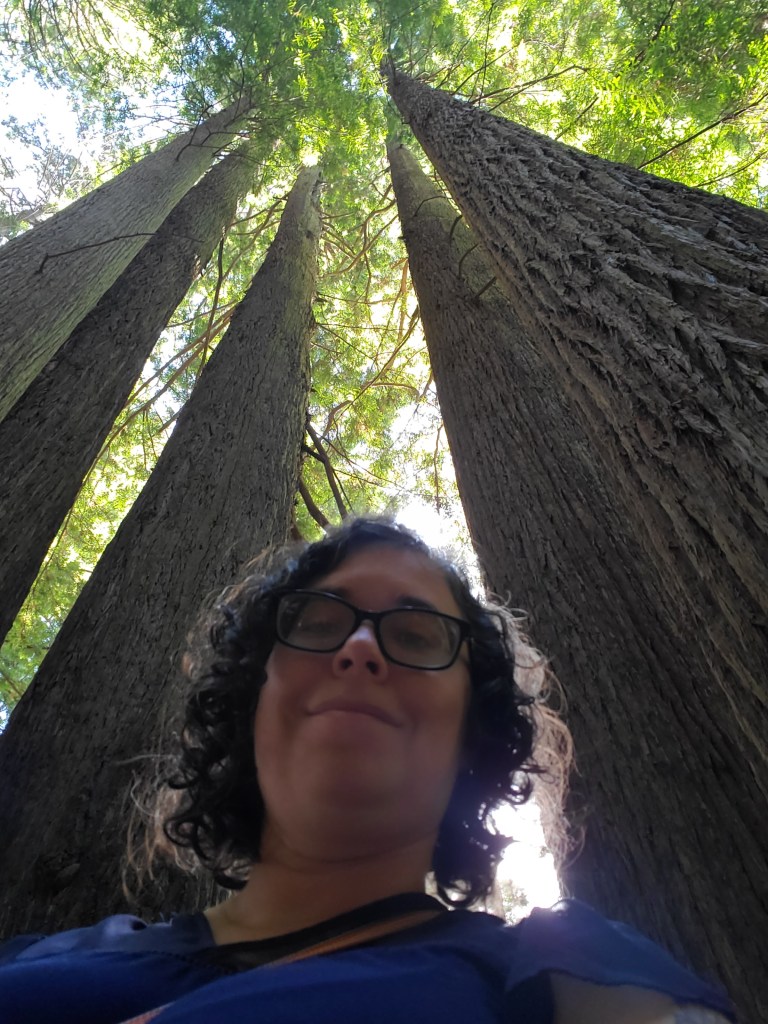
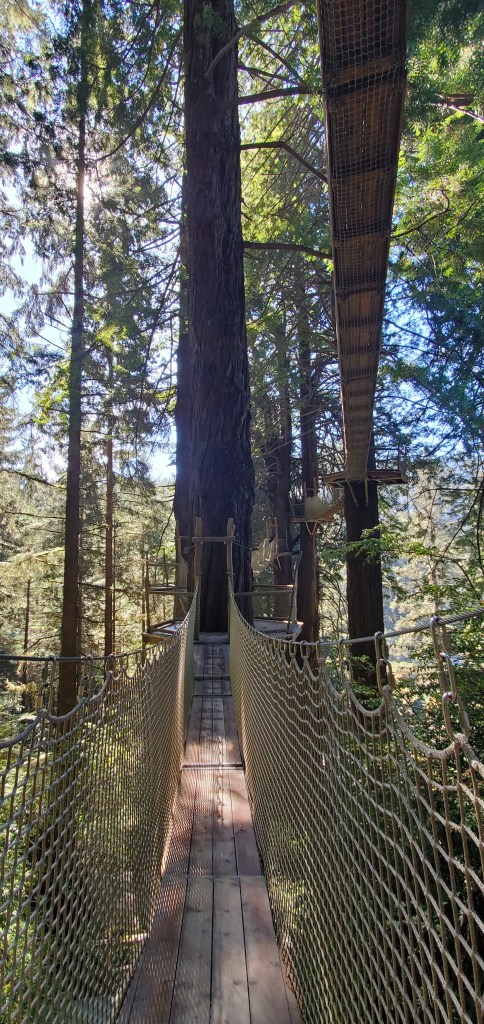
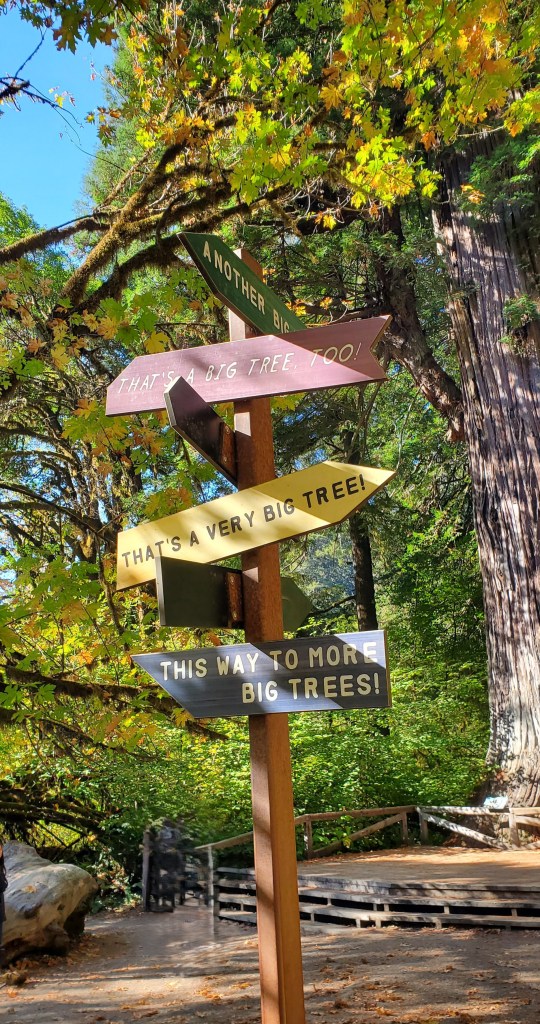
I find myself taking selfies with trees like others take photos with celebrities. Call me the tree paparazzi if you will. When we moved from the Oregon coast down the Hwy 101 to California, we stayed a week in Crescent City. It was wonderful to enjoy what would be some of our last days at the beach while also reveling in the thick, quiet Coastal Redwood and old growth forests. We made a trip to the Trees of Mystery, a privately owned Redwood grove and tourist attraction. They had walkable bridges allowing visitors like us to walk among the Redwood canopy, which was magical.
We visited the Redwood National Park trails that same week, walking among the ancient trees with a reverence that will live in my forever. Each time we saw one that felt like the most extraordinary tree we’ve ever seen, we passed another one. I had to keep time on the trails or we would have spent four hours on one trail, Ramiro photographing each tree, copse of ferns and moss logs. But I can’t really complain either, since I stop just as much to admire every small miracle around us.
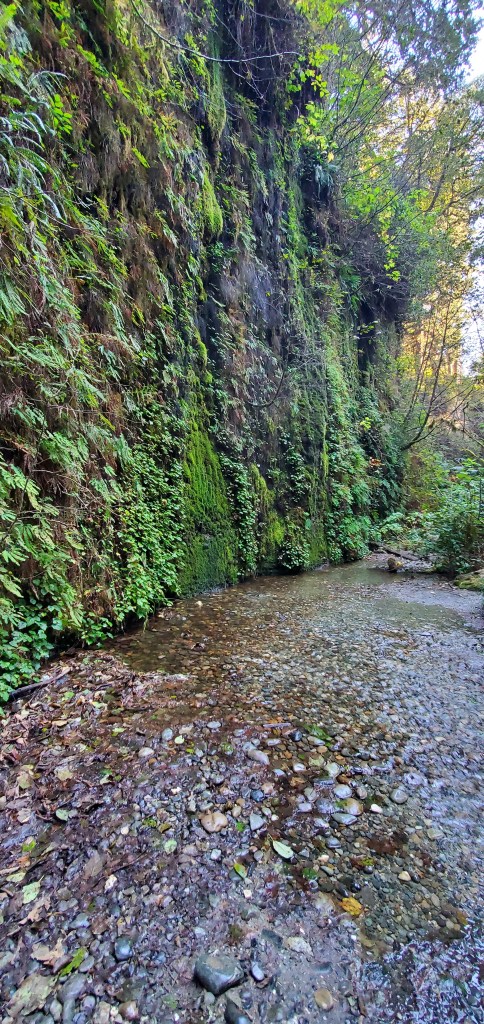
At Fern Canyon, I was thrown into my own millennial nostalgia knowing they filmed parts of Jurassic Park: The Lost World there. I was proud of my creaky knees and leaping ability to climb over fallen logs and rocks in the creek bed to admire the shock of bright moss and rock walls of verdant ferns. It felt both otherworldly and surreal to be there in a place I had only ever seen on screen, suddenly able to run my fingers gently through the blankets of moss and fern fronds growing so close to me. It made me run home to read more in Gathering Moss by Robin Wall Kimmerer as I have been throughout our journey whenever I encounter a lot of moss!
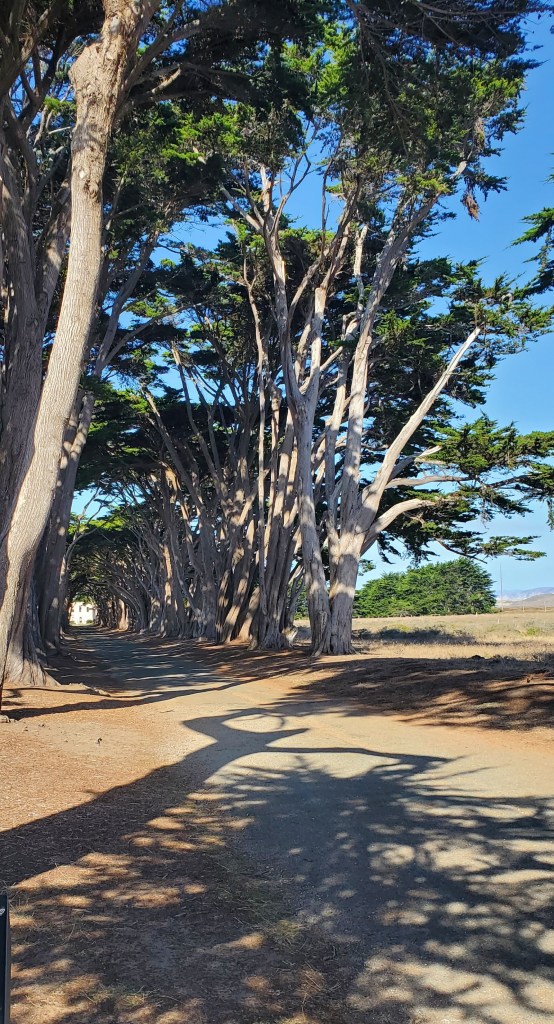
Before leaving Petaluma at the end of October, we made a day trip to Point Reyes, our last beach day before heading inland. While there, Ramiro had found this point of interest for us to visit, the The Historic KPH Maritime Radio Receiving Station stewarded by the National Park Service. Along the dirt road leading to the radio station building are two long rows of cypress trees called The Cypress Tree Tunnel, both beautiful and eerie.
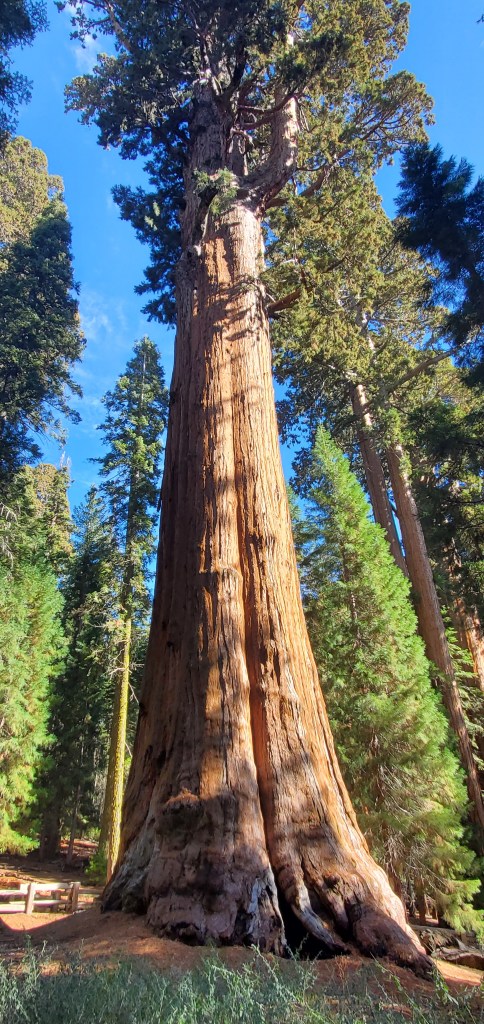
The one place that Ramiro has had on his list to visit since we started out West is to visit Sequoia and Kings Canyon National Park to witness the General Sherman tree. In early November we traveled to Fresno, CA for a week to be close to the parks and made the drive up into the Sierra Nevada mountains where the temperature cooled by at least ten degrees and there was already snow on the ground. We embarked on the fairly short trail to the forest area where several other visitors were lining up to see the giant trees.
Looking up at the white whispy clouds moving made it seem as though the gigantic tree has its own orbit. Visitors can walk around the circumference of the tree, a testament for how big it really is. This particular Sequoia, as with the others, is its own ecosystem, a microcosm for smaller creatures like birds, squirrels and spiders to travel across and nest in. About twenty feet up the trunk of the tree, in a burn scar from a previous wildfire, a spiderweb glistened in the midafternoon sunlight. Fire has marked this tree, and many others nearby, though they are adapted to be fire resistant. It has scarred, like many of its neighboring trees, burning away the thick outer bark to reveal inner faces.
Unlike the sturdy oaks, the humble and versatile trees I am most used to and love, these giants have roots that live close to the soil’s surface and do not have taproots that anchor them deeper into the earth. Thus, these ancients periodically fall, their bodies littering the forest floor to make space for new life, just as the nurse logs we witnessed in the Hoh Rainforest in Olympic National Park. Something that the forests are always teaching us: in death there is life and in life there is death.
It is strange to walk among these trees, some over two thousand years old, several bizarrely named after US politicians and military figures, the egos of these men, many who have despicable legacies, tied to a growing living being that has been here since before those men existed and will, with any luck, be there long after many of us are gone. Their scientific names are Sequoiadendron giganteum, a species of coniferous tree related to the Redwoods, both long threatened by logging and increasingly violent wildfires. Apparently, a group of settlers in the area attempting to create a utopic society wanted began calling the tree the Karl Marx tree. It made me wonder what the original Native stewards of this land called these trees?
After doing a bit of reading, I found this resource about the Tule River Tribe and their relationships to the giant sequoias. An elder from that tribal community referred to them as the Ancient Ones, which feels very fitting. I appreciated that these communities and forestry services are working to both protect and bring back traditional forestry methods to prevent severe damage to old growth forests that climate-induced wildfires can cause. The National Park Service also acknowledges the many tribes that have called this land their home and have ancestral ties to these protected lands.
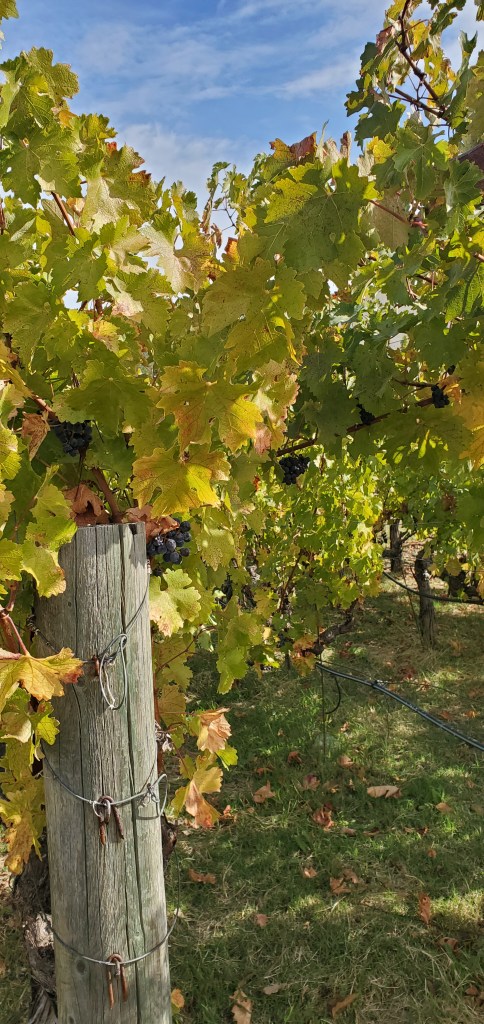
Coming down from the mountains, leaving these incredible trees behind was challenging, but it made our encounters with other trees around us that much more spectacular. In Sonoma and Napa, there were orchards and vineyards we visited providing fruit and grapes for winemaking. In Fresno, we passed several fields of orchards replete with mandarin oranges, lemons, almond trees and much more. While visiting our friends in Riverside, CA (shout out to Sarah and Manny!), we drove by more orchards and so many homes with fruit bearing trees heavy with oranges, lemons, pomegranates, even banana and cacao! It was a strong reminder that though these trees don’t tower above the surrounding fields, they are feeding the community and the rest of the country, with the labor of farm workers who pick the food on our plates year-round, and are thanked for their work with extremely low wages, long term exposure to pesticides and are terrorized by ICE.
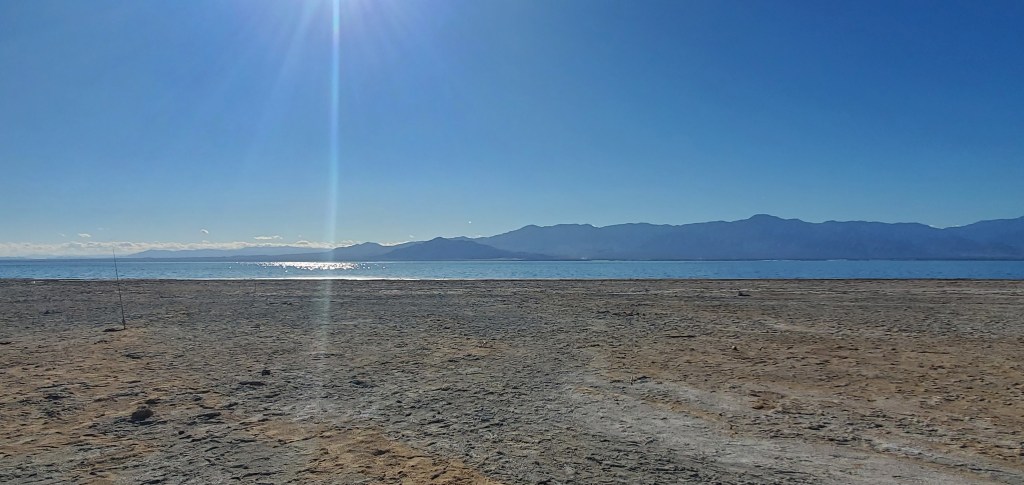
This labor was most evident on our visit to the Salton Sea State Recreation Area, which I was curious about after reading Salt Bones by Jennifer Givhan earlier in the year. The Salton Sea is a strangely beautiful and haunting “accidental sea,” and surrounding it are small communities and large swaths of corporate farmland where farm workers live in mobile homes and harvest the food that is sold all over the country.
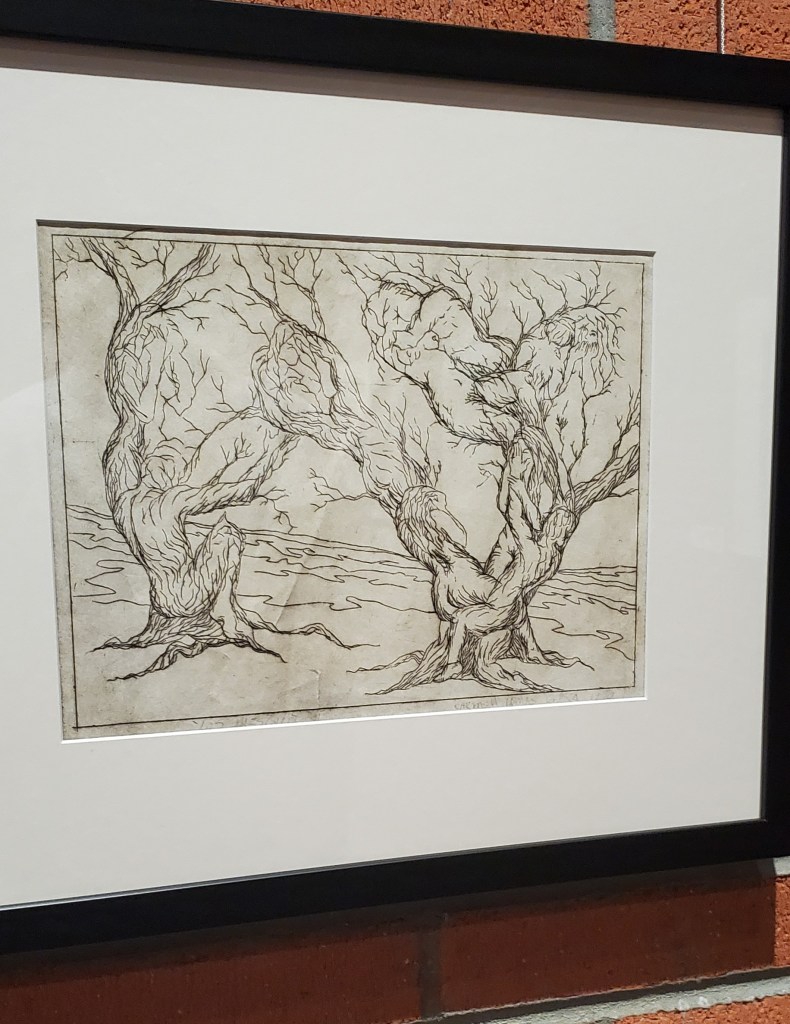
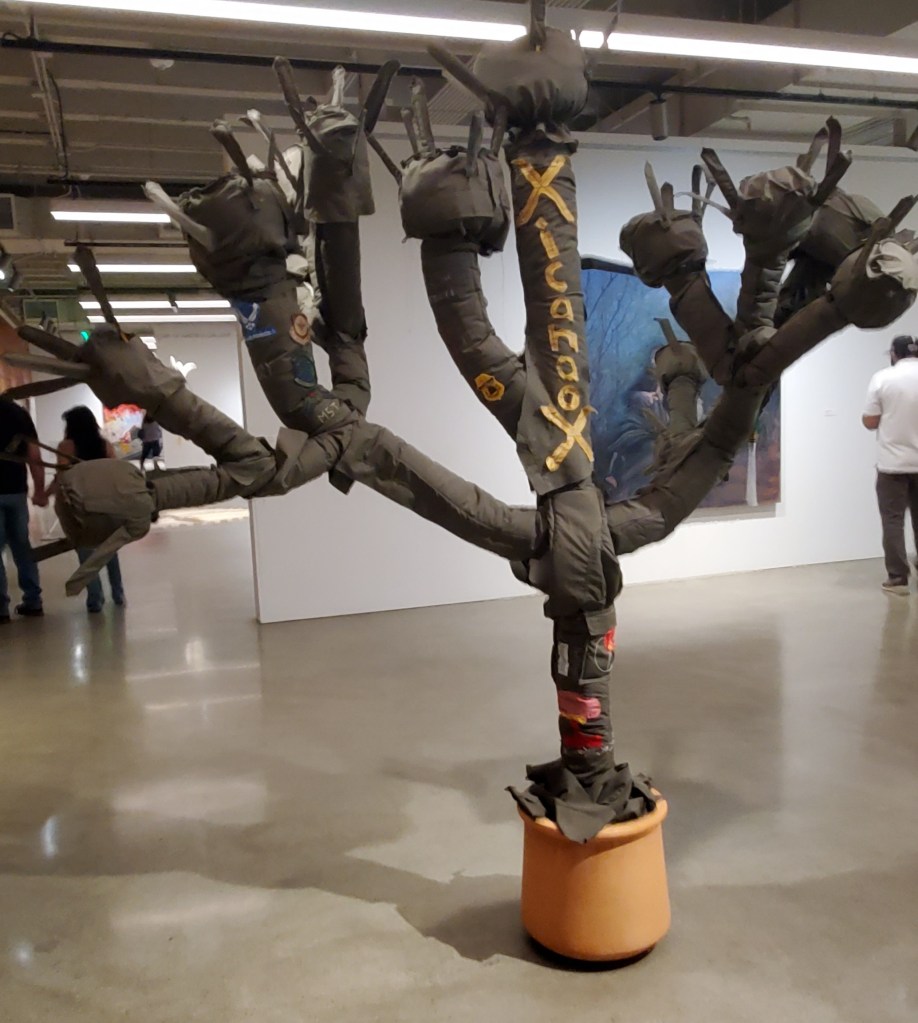
While visiting our friends in Riverside, they kindly took us to the The Cheech Marin Center for Chicano Art & Culture to see the Carmen Lomas Garza exhibit. She is one of my favorite artists with roots in South Texas, so it was wonderful to see the progression of her artwork over time and how she depicts Mexican American family and community life, as well as her history of advocacy. Several other artists featured at the museum had created art that critiqued the racist history of the United States, the plight of migrants from Mexico and Central America, the military industrial complex and much more.
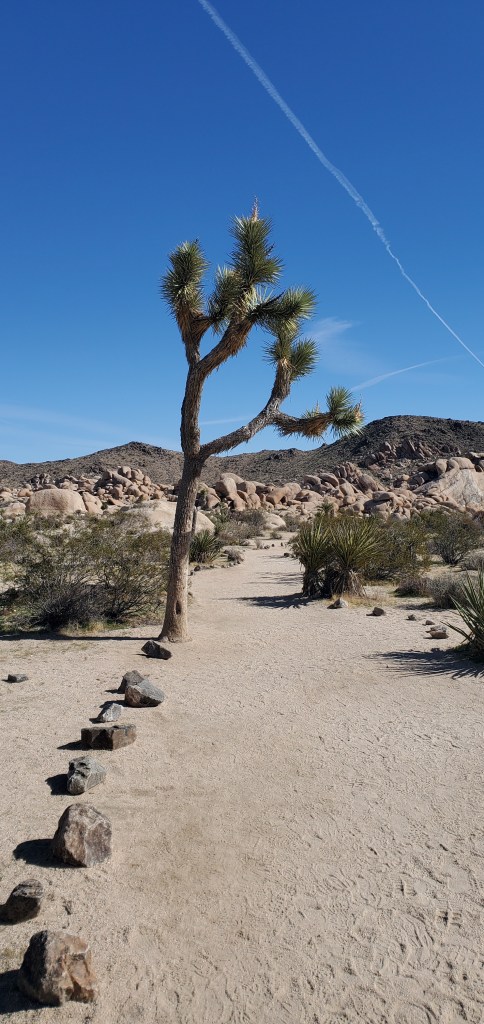
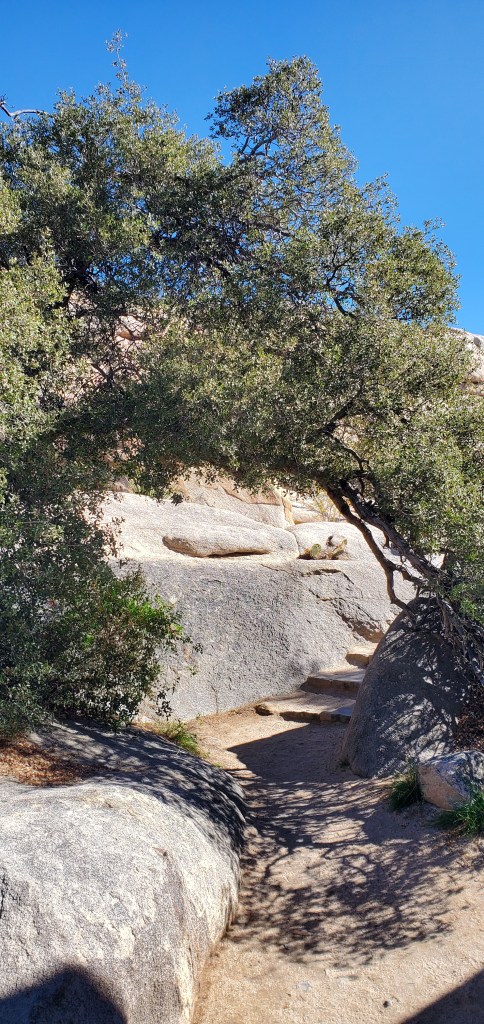
Our final stop in California was to visit Joshua Tree National Park. As we hiked on the Barker Dam trail and to the Arches and Heart Rock, it was wondrous to take in these bizarre trees of this desert landscapes after several months in crowded forests. Joshua Trees, or Yucca brevifolia, are part of the agave family. It’s said that the common name comes from Mormon settlers, and the name stuck to this day. These trees can also be quite old, but are not immune to strong desert winds and other conditions that can cause them to crack and topple.
Growing near the Joshua Trees are the long alien fingers of ocotillo rising from the earth, tickling the sky with blooms. The cholla cactus best known for their reactive, painful spines, crowd the trails of this landscape. When we visited the Cholla Garden on our first day exploring, we weren’t there for five minutes before we heard a woman screaming who had been stuck with those bent spines. These thorny beauties provide food and resources for creatures such as the desert pocket mouse, bighorn sheep, birds and much more! We exercised caution around those docile cacti bushes, but you can’t hate a plant that insists on its own existence that much.
We happened to be visiting the area during the Twenty Nine Palms Book Festival, and it was great to attend this small event and meet local authors, poets, booksellers and creators who are paying homage to Joshua Tree and the beauty of this place with their work. We had the privelege of listening to a reading by authors published in the zine, P.O. Box Outer Space, which was very moving! I got a copy and hope to submit something in the future!
As I’ve been working on my eco-fiction collection I started writing last year, learning more about land stewardship and the history of “tree sitters” and defenders has been an interesting rabbit hole. While I have gratitude for the forestry services and National Forest and Park designations that protect these varied landscapes and ancient trees, I am well aware of how fragile these protections have been and are, especially under an administration actively stripping away environmental protections from public, sacred lands. I think of the protesters who were arrested this year for trying to protect the hundred-year-old Grandmother Cottonwood tree in Arizona which was tragically uprooted for Border Wall construction and the defenders of the Saguaro cacti in Arizona, already threatened by increased heat waves, now threatened with being cut down or uprooted for the very same Border Wall, similar to the threats to the vital desert ecosystems being destroyed in Big Bend National Park. So many times the US government, military or corporations threaten these ecosystems and sacred lands we hold dear, Native communities are the first defenders, invoking tribal sovereignty or putting themselves in danger of state violence to fight back as much as possible.
I’m writing this newsletter the day after the US Army’s detonation of a lead azide bomb over Iowa the day before a national holiday, potentially poisoning the local communities and ecosystems with widespread implications for the farmland, soil and waterways, as lead and other heavy metals do not easily break down and can have incredibly detrimental affects on the most vulnerable people, especially children and disabled people, many of whom are unable to evacuate without assistance. This is an act of eco-terrorism in the long history of this country poisoning communities from the “Downwinders” affected by the fallout of nuclear testing in Nevada, Utah and New Mexico to the people of Flint Michigan who still do not have access to safe drinking water, to the peoples of Hawaii who have long been affected by military occupation and pollution. It is difficult to focus on much else, knowing that this country, and especially our military, will poison us, terrorize us without a second thought. With friends like these, who needs enemies?
I don’t have an easy conclusion sitting with this disaster and many other continued threats to our health, safety and public lands. But I do think about the steadfastness of all the ecosystems, the trees I have had the privilege to meet across this country. Their ages are often difficult to define without cutting them down to see their rings or studying the geological time around them, making them that much more impressive for all they have withstood, and how they communicate with one another and share resources, even after death (I highly recommend this lecture from the Central Texas Mycelogical Society I watched earlier this year on the fungal relationships in the “wood-wide web”). We have so much to learn from trees, and from the continued work that so many communities are doing to fight against eco-terrorism and injustice. The fight continues as long as the government, military and corporations believe that all our precious resources and ecosystems are for sale.
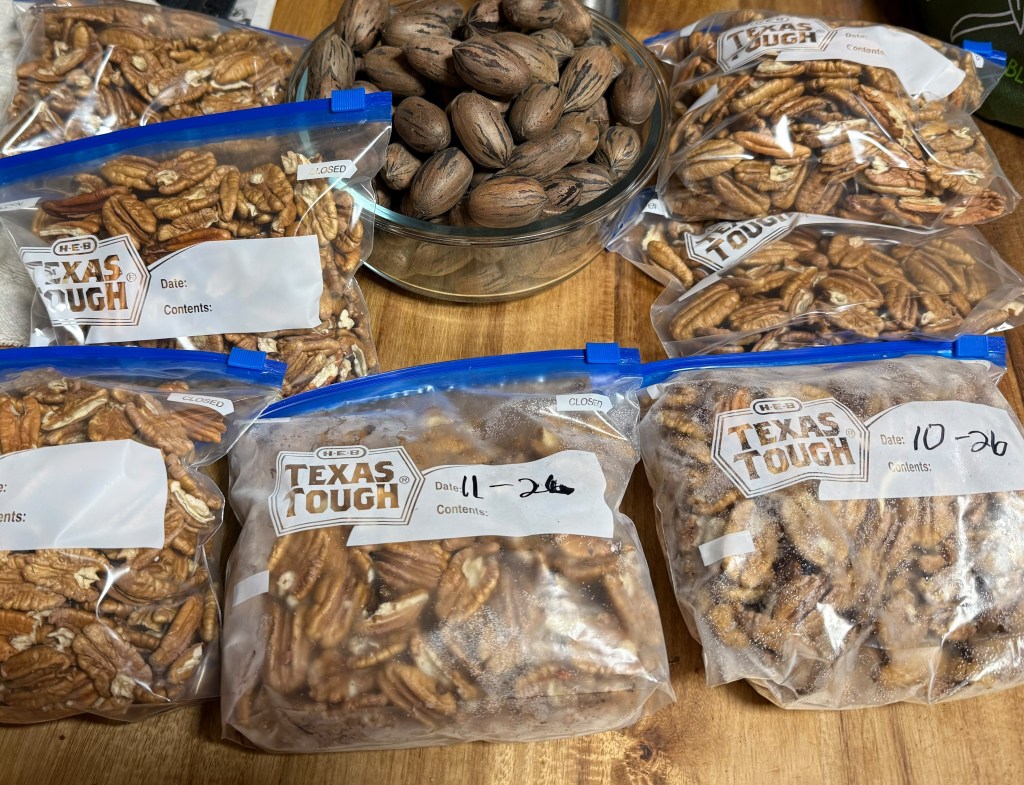
At home, my parents are harvesting pecans before the late fall and winter holidays, thankful for these trees that have already had a history on the land they are living on for many years before them. Mom tells me she is storing some for the season, and using some to make pecan pie this week. I look forward to being greeted to Christmas pecans, sweet and crunchy, waiting to be shared.
For now, we are spending time in Flagstaff, AZ visiting the Grand Canyon National Park and surrounding areas again (more on that in my December newsletter), marveling in the Juniper and Ponderosa Pines around our campsite, acting as great perches for the huge and very vocal ravens nearby. As we continue making our way East, back towards home, I will know we’re back in Texas when wide spanning live oaks take over the rolling hills. Until then, I cherish each new tree I get to say hello to, their branches overhead sheltering us as we move around their roots, guests in the wake of their long history.

If you’re interested in becoming a paid subscriber to support the newsletter and my work, I’d love to have you! Just $5 a month will help me continue to offer curated book recommendations, writing prompts, author spotlights, resources and more! You will also receive discounts on future workshops and editing services. It’s hard to be an independent artist, and your monthly support helps make my work more sustainable.
2026 Projects, Workshops and Events
- Reconnecting to the Body Workshop at Palabras Bookstore
- December 3rd, 6:30pm-8:30pm at Palabras Bookstore in Phoenix, AZ
- Herencia Speaker Series: Poetry Workshop with Leticia Urieta
- December 6th at 2pm at the National Hispanic Cultural Center in Albuquerque, NM
- Herencia Speaker Series: Poetry Reading with Leticia Urieta
- Wednesday, December 9, 2026 at 6:30pm at the National Hispanic Cultural Center in Albuquerque, NM
I also got the chance to speak with Adam and Rebecca about The Remedy is the Disease, on their podcast, Horrifically Well Read. You can listen to the episode here!

I spent much of this year promoting my two most recent books, my horror collection, The Remedy is the Disease, from Undertaker Books and My poetry chapbook, Offerings to the Tumbled Temple, from Purple Ink Press!
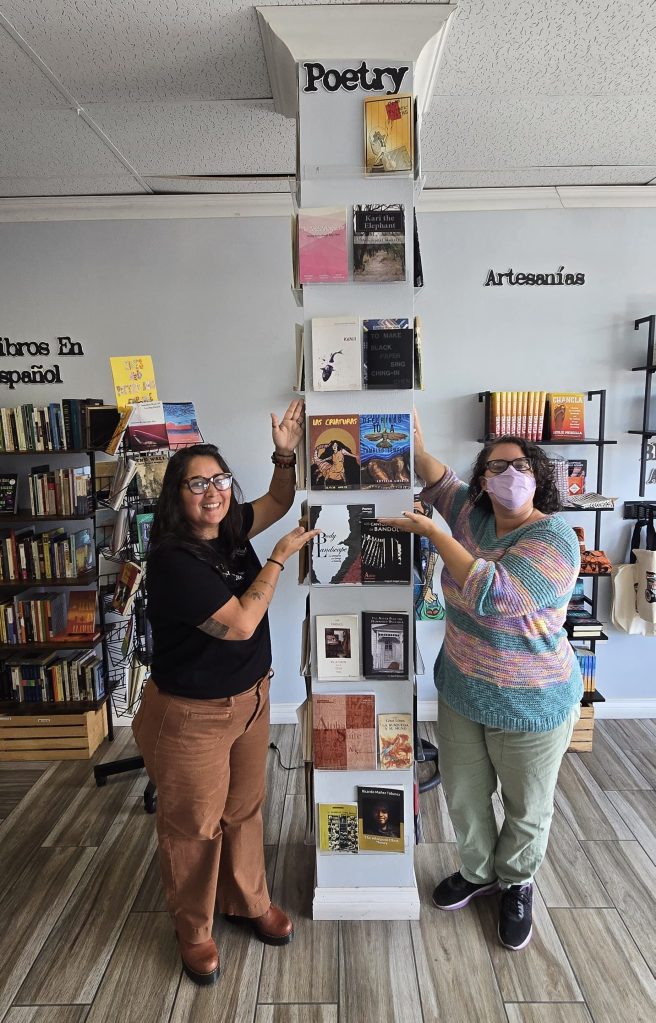

Shout out to the indie bookstores I got to visit recently, some of which are stocking my books, including Libromobile Bookstore, founded by my good friend Sarah Rafael Garcia, Word Horde Emporium in Petaluma, CA and Palabras Bilingual Bookstore in Phoenix, AZ.
Holiday Gift Ideas
Looking for some holiday gifts for the readers and writers in your life? I have some suggestions!
- Buy a copy (or three!) to gift your loved ones who enjoy reading.
- Gift your the writer in your life funds for my editing and mentorship services!
- Become a Supporting Subscriber for just $5/month to help me continue to create this newsletter and share my resources you and many others!
What I’m Reading and Watching: Books About Trees
I love reading science and history texts about the natural world, and books about trees and landscapes are no exception. Here are some of the books I have on my list:
- The Ghost Forest: Racists, Radicals and Real Estate in the California Redwoods by Greg King
- Hidden Life of Trees by Peter Wollehben
- When Trees Testify: Science, Wisdom, History, and America’s Black Botanical Legacy by Beronda L. Montgomery
- The Legacy of Luna by Julia Butterfly Hill
- The Trees Witness Everything by Victoria Chang
- The Birthing Tree by Amanda Peters
It is also Native American Heritage Month. Including the book by Amanda Peters, I am also reading or plan to read:
Back for Blood: Never Whistle at Night II Anthology edited by Shane Hawk and Theodore C. Van Alst Jr.
It Looks Like You in The Dark by Mathilda Zeller
The Lost Journals of Sacajewea by Debra Magpie Earling
Also, North of North Season 2 and Dark Winds is on Netflix, two of my favorite series!
In addition, Read Palestine Week is next week, so if you want to participate and need book recommendations, and/or want to learn more about this initiative to highlight Palestinian writers and creators, visit the link above!
Writing Prompts
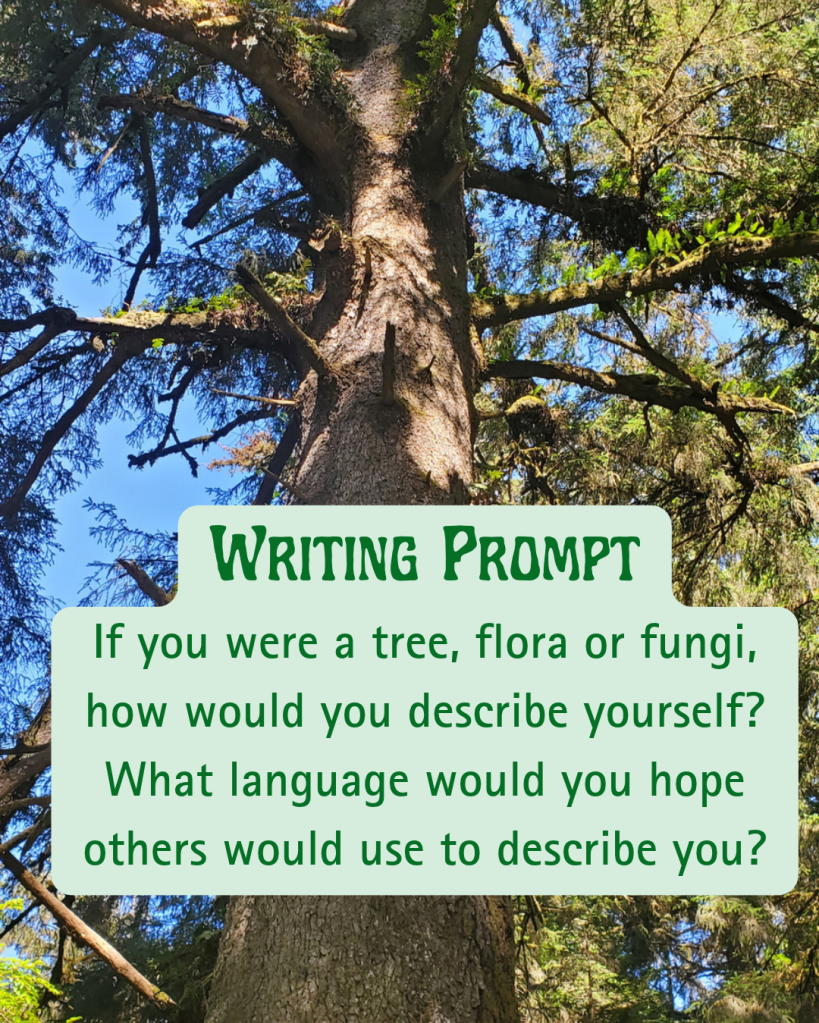
If you were a tree, flora or fungi, how would you describe yourself? What language would you hope others would use to describe you?
Call to Action: Community Care Spotlight
This space is meant to spotlight communities, creators and activists who are taking action to resist and do caring things for others. This month, I am highlighting:
- The Water Protector Legal Collective (WPLC), an indigenous-led organization, is calling on folks to sign this open letter U.S. House of Representatives opposing the Bipartisan American Affordability and Jobs Act of 2026 (BAAJA) and encouraging folks to contact their House Representatives to oppose BAAJA as it has the potential to erode more environmental and public health protections than has already been done by DOGE and the Trump Administration.
- As we enter the winter holiday season, get to know your local food bank and/or mutual aid groups to donate money, goods or your time! Food insecurity is at an all-time high as SNAP benefits are continuing to be cut and cost of living is making food unaffordable for so many. Any little bit helps!
- Watch “Earth’s Greatest Enemy,” an incredible documentary by journalist Abby Martin about the US Military’s role as the single largest polluter in the world and how resisting militarism is a fight for environmental sovereignty and protection.
Keeping making room for those moments of agency and care!
Leticia
Discover more from Leticia Urieta
Subscribe to get the latest posts sent to your email.
